


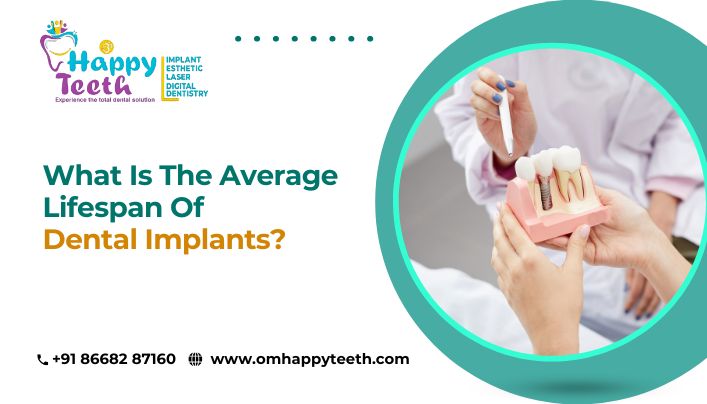
Imagine repairing a house’s foundation; once it is done correctly, the structure stands strong for decades. Dental implants work much the same way. They replace the root of a missing tooth and create a stable base for a crown, restoring both function and appearance. But before beginning treatment, almost every patient asks the same question: How long will my dental implant last?
The truth is that dental implants are one of the most durable and predictable tooth-replacement solutions available today. When placed correctly and properly cared for, they can last for many years, often decades.
If you are tired of searching for affordable implants in Pimple Saudagar, then Om Happy Teeth provides dental implants in Pimple Saudagar that last long. We have created this blog to explain the expected lifespan of implants, the factors that influence it, and what you can do to ensure your implants remain strong in the long term.
How Long Do Dental Implants Last on Average?
Most dental implants last 15 to 25 years, and many last even longer sometimes up to a lifetime. Implants are made of biocompatible titanium or zirconia, materials that integrate naturally with the jawbone through a process called osseointegration.
Once fused, the implant becomes part of the bone structure, providing support similar to a natural tooth root.
While the implant screw itself is extremely long-lasting, the crown attached to it may need replacement sooner (usually every 10–15 years), depending on the material and usage.
Are Dental Implants Permanent?
In many cases, yes, dental implants can be considered a long-term or permanent solution. They do not decay, and they are resistant to most issues that affect natural teeth. However, longevity depends on your oral health, bone support, habits, and professional maintenance.
What Affects Their Lifespan?
Now, let’s break down the major factors that influence how long your implant will stay strong.
-
Quality of Jawbone Support
Dental implants need healthy bone to stay firm. If the jawbone is thin, weak, or resorbed, your dentist may recommend:
- Bone grafting
- Sinus lift (for upper back teeth)
- Ridge preservation
With proper support, implants integrate more securely and last much longer.
-
Overall Oral Hygiene
Even though implants don’t decay, the gums and bone around them can become infected if plaque builds up.
Good oral hygiene is essential to prevent peri-implantitis, an infection that can weaken the bone and shorten implant lifespan.
Daily care includes:
- Brushing twice a day
- Cleaning around the implant with floss or interdental brushes
- Using non-abrasive toothpaste
- Regular professional cleanings
Patients who maintain healthy gums enjoy implants that last for decades.
At Om Happy Teeth, each implant case is planned carefully using detailed evaluation, ensuring accuracy and long-term success.
-
Implant Material and Design
Titanium implants have been used for decades due to their durability, biocompatibility, and integration strength.
Zirconia implants are an option for metal-free dentistry, but require more precise placement.
High-quality implants tend to last longer because they integrate more reliably and resist corrosion.
-
The Type of Restoration on Top
The implant supports a restoration such as:
- A single crown
- A bridge
- A denture (in full-mouth cases)
The more pressure the implant endures, the more maintenance it may require.
Crowns last 10–15 years on average, but can last longer with proper care.
-
Bite Forces and Habits
Habits that affect implant longevity include:
- Teeth grinding (bruxism)
- Chewing ice
- Nail biting
- Using teeth as tools
Patients with bruxism benefit from wearing a nightguard to protect the implant crown.
-
Smoking and Medical Conditions
Smoking reduces blood flow to the gums and slows healing, increasing implant failure risk.
Conditions that may affect implant lifespan include:
- Uncontrolled diabetes
- Autoimmune disorders
- Weak immune system
With proper management and monitoring, many patients with health conditions still enjoy long-lasting implants.
-
Age and Bone Maturity
Adult patients with stable bone density have higher implant success rates.
Younger patients with developing jaws may require careful planning to avoid future complications.
-
Regular Dental Check-Ups
Long-term implant health depends on professional monitoring. Dentists check:
- Bite alignment
- Bone stability
- Gum health
- Crown attachment
Routine maintenance helps catch issues early, preserving implant longevity.
-
Maintaining Healthy Surrounding Teeth
Implants depend on the health of neighboring teeth and gums.
If surrounding teeth develop decay or gum disease, the implant area may also become vulnerable.
Good oral hygiene practices protect both natural teeth and implants.
Do Dental Implants Fail? Why Failure Happens
Implant failure is rare, with success rates above 95%. When failure occurs, it may be due to:
- Infection (peri-implantitis)
- Poor placement
- Lack of bone support
- Smoking
- Severe grinding
- Uncontrolled systemic conditions
With proper planning and aftercare, the risk of implant failure remains extremely low.
Does Cost Affect the Longevity of Dental Implants?
It’s important to understand what “affordable” means in implant dentistry. The goal is value, not simply a low price.
Factors that influence cost and longevity include:
- Type and brand of implant
- Required bone grafting
- Quality of restoration
- Follow-up maintenance
Cheaper implants may compromise quality, lifespan, or fit.
High-quality implants often last longer and require fewer repairs.
At Om Happy Teeth, we offer affordable implants in Pimple Saudagar that do not compromise quality. Instead, we focus on long-term success with clear guidance and transparent planning.
How Long Do Full-Mouth Implants Last?
Full-mouth treatments such as:
- All-on-4
- All-on-6
- Implant-supported dentures
These systems rely on multiple implants distributing bite pressure evenly.
With proper care, they can last 15–20 years or longer.
The bridges or dentures attached to them may need replacement or modification over time due to wear.
Are Dental Implants Worth the Investment?
Many patients agree that implants are worth the investment because they offer:
- Long-term stability
- Natural aesthetics
- Restoration of chewing ability
- Prevention of bone loss
- No damage to adjacent teeth
- Confidence in smiling and speaking
When viewed as a long-term solution, implants often become more cost-effective than bridges or dentures.
Signs Your Implant Is Aging and Needs Attention
Even though implants are durable, occasional signs indicate the need for evaluation:
- Gum recession around the implant
- Difficulty chewing
- Mobility (rare but possible)
- Pain or swelling
- Cracks in the crown
- Food is getting stuck around the area
Early intervention helps preserve implant health.
How to Make Your Dental Implants Last Longer
To maximize implant lifespan:
✔ Maintain excellent oral hygiene
✔ Avoid smoking
✔ Wear a nightguard if you grind teeth
✔ Visit your dentist every 6 months
✔ Avoid overly hard or sticky foods
Simple habits can prolong your implant’s life significantly.
Ready to Restore Your Smile with Confidence?
Dental implants provide remarkable long-term benefits, but knowing how they work and how long they last helps you make the best decision for your oral health.
With proper care, implants can last decades and often a lifetime. For those seeking reliable and affordable implants in Pimple Saudagar, Om Happy Teeth offers dental implants in Pimple Saudagar and long-term support to help you maintain a healthy, stable, beautiful smile for years to come.