


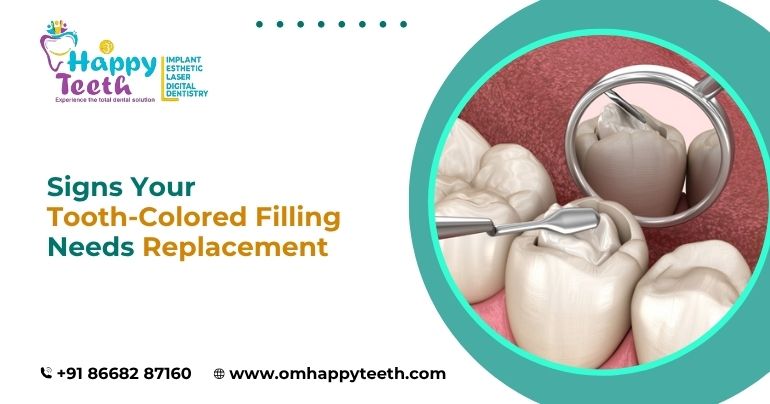
You bite into something crunchy and suddenly feel a sharp sensation in your tooth. Maybe your filling feels rough when you floss. Maybe cold water suddenly causes sensitivity that was never there before. At first, you ignore it because the filling still “looks fine” from the outside.
But dental filling treatment does not last forever.
Over time, daily chewing pressure, food habits, teeth grinding, and natural wear slowly weaken fillings. Even well placed tooth colored fillings can eventually crack, loosen, stain, or stop protecting the tooth properly.
The problem is that most people do not notice the warning signs early enough. By the time pain becomes obvious, the tooth underneath may already be damaged again.
At Om Happy Teeth, many patients come in thinking their filling only needs polishing, only to discover hidden damage below an old restoration. Knowing when a filling needs replacement can help you avoid larger dental problems later.
What Are Tooth Colored Fillings?
Tooth colored fillings are modern dental restorations designed to repair cavities while matching the natural tooth color of your teeth.
Unlike silver fillings, they blend naturally with surrounding teeth and improve both function and appearance.
The composite fillings are commonly used for:
- Small to medium cavities
- Front tooth repairs
- Minor tooth fractures
- Cosmetic corrections
- Replacing old metal fillings
Modern composite dental fillings are popular because they restore damaged teeth without creating a metallic appearance inside the mouth.
Many patients today prefer white tooth fillings because they look more natural while smiling and speaking.
Increased Tooth Sensitivity Is Often the First Warning Sign
One of the earliest signs of filling damage is increased sensitivity.
You may notice discomfort while:
- Drinking cold water
- Eating sweets
- Having hot tea or coffee
- Biting harder foods
This can happen when the filling develops tiny gaps that expose the tooth underneath.
Patients needing dental filling treatment often ignore sensitivity for months before realizing the tooth is becoming weaker again.
Early treatment helps prevent more complicated decayed tooth repair procedures later.
Pain While Chewing Should Never Be Ignored
A healthy filling should feel stable while eating.
If chewing starts feeling uncomfortable, it may indicate:
- Cracks in the filling
- Hidden decay below the filling
- Uneven bite pressure
- Damage to the surrounding tooth
Many patients needing cavity filling treatment in Pimple Saudagar visit us only after chewing pain becomes difficult to tolerate.
Persistent chewing discomfort often indicates the need for decayed tooth repair before the problem worsens further.
Rough or Sharp Edges Around the Filling
Run your tongue across the filled tooth carefully.
If the surface suddenly feels rough, uneven, or sharp, the filling may be breaking down.
This may happen because:
- The filling chipped slightly
- The edges started wearing away
- Small fractures developed
- The material weakened over time
Modern composite fillings usually feel smooth and natural, so roughness is often an early warning sign.
Small cracks may eventually require chipped tooth filling procedures to rebuild damaged areas safely.
Dark Spots Around the Filling Area
A filling may still appear intact while decay slowly develops around it.
Watch for:
- Dark lines near the filling
- Brown staining around edges
- Black spots near the tooth surface
- Changes in tooth color
Sometimes, hidden bacteria enter tiny gaps and start damaging the tooth again.
This may eventually require cavity restoration procedures to remove the damaged portion and rebuild the tooth safely.
Modern invisible dental fillings help restore the tooth without affecting smile appearance.
Your Filling Feels Loose
A filling should never feel movable inside the tooth.
If it feels loose while eating or flossing, it may indicate:
- Weak bonding
- Tooth damage underneath
- Filling shrinkage
- Cracks in the tooth structure
Loose restorations increase the risk of infection and may lead to more complicated damaged tooth repair later.
Patients receiving modern aesthetic dental fillings are usually advised to attend regular checkups so that early loosening can be detected quickly.
Cracks in the Tooth or Filling
Tiny cracks are not always visible in the mirror.
But symptoms may include:
- Sharp pain while biting
- Sudden sensitivity
- Rough filling texture
- Discomfort with temperature changes
Over time, cracked fillings stop protecting the tooth properly. This may require chipped tooth filling procedures if small fractures begin affecting the visible tooth structure.
Modern composite dental fillings are commonly used to restore fractured teeth naturally.
Food Getting Stuck Around the Filling
Food should not constantly get trapped near a filling.
When it does, it may mean:
- The filling shape changed
- The edges became uneven
- The filling shrank slightly
- The surrounding tooth weakened
These small gaps allow bacteria to collect and increase the risk of future dental cavities around the restoration.
Proper replacement of old Tooth colored fillings helps prevent deeper decay from developing.
At Om Happy Teeth, patients coming for cavity filling treatment in Pimple Saudagar often report food trapping as one of the first noticeable symptoms.
Changes in the Appearance of the Filling
Modern fillings are designed to match the natural tooth color closely.
However, over time, you may notice:
- Staining
- Dullness
- Color mismatch
- Surface discoloration
Older restorations may no longer blend naturally with nearby teeth.
Replacing aging cosmetic tooth fillings can improve both tooth appearance and overall smile aesthetics.
Modern seamless tooth restoration techniques help fillings blend naturally with nearby teeth.
Why Old Fillings Become Weak Over Time
Every filling experiences daily stress from chewing and temperature changes.
Eventually, the material may weaken because of:
- Constant pressure during eating
- Grinding habits
- Acidic foods and drinks
- Poor oral hygiene
- Aging of the bonding material
Even durable composite fillings need occasional replacement when the supporting tooth structure changes over time.
Patients today increasingly prefer mercury free fillings because they offer a more natural appearance.
Advantages of Replacing Old Fillings Early
Replacing weakened fillings early can prevent more serious treatment later.
Benefits include:
- Better tooth protection
- Reduced sensitivity
- Lower infection risk
- Improved chewing comfort
- Better smile appearance
Modern aesthetic dental fillings also improve cosmetic appearance because they blend naturally with surrounding teeth.
Many patients prefer cosmetic tooth fillings because they create a cleaner and more natural smile appearance.
Why Composite Fillings Are Popular Today
Modern dentistry focuses heavily on preserving natural tooth appearance.
This is why many patients now prefer:
- mercury free fillings
- Natural looking restorations
- Minimal tooth removal
- Strong bonding materials
- Better smile aesthetics
Today’s invisible dental fillings are designed to restore teeth while remaining almost unnoticeable during smiling or speaking.
Proper filling replacement also supports healthier tooth enamel repair over time.
Can a Filling Be Repaired Instead of Replaced?
Sometimes, small filling damage can be repaired without full replacement.
This depends on:
- Size of the damage
- Presence of new decay
- Condition of the surrounding tooth
- Age of the filling
Minor damage may only require small adjustments, while severe damage usually requires complete replacement.
Dentists carefully examine the tooth before recommending replacement.
Modern tooth colored fillings often allow for more conservative treatment than older filling materials.
How Dentists Replace Tooth-Colored Fillings?
The process is usually simple and comfortable.
It often includes:
- Removing the old filling
- Cleaning damaged areas
- Checking for hidden decay
- Rebuilding the tooth carefully
- Polishing the surface smoothly
Modern Tooth colored fillings are shaped carefully to match nearby teeth and restore proper function naturally.
Today’s materials also improve long-term seamless tooth restoration results.
Protecting Your Fillings for Longer Life
Good habits can help fillings last longer.
Important habits include:
- Brushing twice daily
- Flossing consistently
- Avoiding very hard foods
- Wearing a night guard if needed
- Visiting the dentist regularly
Strong oral hygiene also supports better tooth enamel repair and reduces the chances of new cavities forming around restorations.
Patients receiving Tooth colored fillings are often advised to avoid habits like ice chewing or nail biting that increase filling stress.
When You Should Visit the Dentist Immediately
Do not delay a dental visit if you notice:
- Sudden tooth pain
- Loose filling sensation
- Sharp edges
- Swelling around the tooth
- Pain while chewing
- Visible cracks or fractures
Ignoring these signs may eventually require larger procedures instead of simple filling replacement.
Early damaged tooth repair helps preserve more natural tooth structure and reduces future complications.
Frequently Asked Questions
How long do tooth-colored fillings usually last?
Most fillings last several years, depending on oral hygiene, chewing habits, and the size of the filling. Regular dental checkups help detect wear before serious problems develop.
Can old fillings cause tooth sensitivity?
Yes. Worn or damaged fillings may develop small gaps that expose sensitive areas of the tooth and allow bacteria to enter.
Are tooth-colored fillings better than silver fillings?
Many patients prefer tooth-colored fillings because they match the natural tooth color and do not create a metallic appearance inside the mouth.
What happens if I ignore a damaged filling?
Ignoring a damaged filling can allow bacteria to enter the tooth again. This may lead to infection, fractures, or larger restorative procedures later.
Small Filling Problems Can Become Bigger Dental Issues
A dental filling may look small, but it plays a major role in protecting your tooth every day. Once a filling becomes weak, cracked, or loose, the tooth underneath becomes vulnerable again.
The good news is that replacing damaged tooth colored fillings early can help prevent larger dental problems and keep your smile strong and healthy for years.
At Om Happy Teeth Dental Clinic, patients receive personalized care focused on restoring comfort, function, and natural-looking smiles. Sometimes, fixing a small filling at the right time can save you from much bigger dental treatment later.