


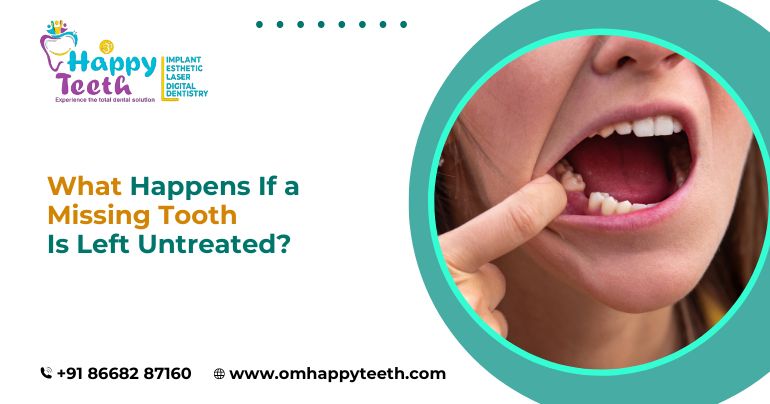
“It’s just one tooth… I can manage.”
That’s what many people tell themselves after losing a tooth. At first, it may not feel urgent. There’s no severe pain, and life goes on. But what most people don’t realize is that untreated missing teeth can slowly create problems that are harder and more expensive to fix later.
If you are in Pune, look no further than Om Happy Teeth for missing tooth solutions in Hinjewadi. We help you to know the importance of what really happens when a gap is left untreated.
Why Untreated Missing Teeth Are More Than Just a Cosmetic Issue?
A missing tooth is not only about appearance. Your teeth are designed to work as a team. Each tooth supports the ones around it. When one goes missing, the balance is disturbed.
Untreated missing teeth can lead to:
- Shifting of neighboring teeth
- Bite imbalance
- Extra pressure on remaining teeth
- Jawbone changes
Even if the gap is at the back and not visible, the damage still happens quietly.
How Fast Do Problems Start After Tooth Loss?
Many patients assume they can “wait for a year or two.” But the changes begin sooner than expected.
Within a Few Weeks
The surrounding teeth may begin to slightly tilt toward the empty space.
3–6 Months
The jawbone in that area starts losing stimulation. When a tooth root is gone, the bone beneath it no longer receives pressure from chewing.
1 Year and Beyond
Bone shrinkage becomes more noticeable. Bite changes may start causing discomfort while chewing.
That’s why, don’t waste your time, visit Om Happy Teeth for missing tooth solutions in Hinjewadi, to avoid more complex treatment later.
Long-Term Effects of Untreated Missing Teeth
Let’s talk about the real consequences that develop over time.
-
Shifting and Misalignment
When a tooth is lost, the adjacent teeth begin to drift into the gap. The opposite tooth may also over-erupt because it has no contact with the opposing tooth. This creates bite problems that may require orthodontic correction in the future.
This is one of the most common effects of untreated missing teeth.
-
Jawbone Shrinkage
Your tooth roots stimulate the jawbone every time you chew. Without that stimulation, the bone slowly reduces in volume: a process called bone resorption.
Over time, this can:
- Change facial structure
- Make future treatments more complicated
- Require additional procedures like bone grafting
Replacing the tooth early helps preserve bone.
-
Premature Facial Aging
When the bone shrinks and teeth shift, the lower part of the face may begin to look sunken. Lips lose support. Fine lines around the mouth may become more prominent.
Many people don’t connect facial aging with untreated missing teeth, but the relationship is very real.
-
Difficulty Chewing
When one tooth is missing, you naturally shift chewing to one side. This uneven pressure puts stress on certain teeth, increasing the risk of fractures or wear.
Digestive health can also suffer because food isn’t chewed properly.
-
Higher Risk of Further Tooth Loss
A single missing tooth can start a chain reaction. Extra pressure on remaining teeth may weaken them over time. Gum problems can also develop around shifted teeth.
That’s why early treatment matters.
What Is the Best Solution for Missing Teeth?
The right treatment depends on:
- Your bone condition
- Number of missing teeth
- Budget
- Long-term goals
At Om Happy Teeth, we carefully evaluate each patient before recommending a solution. The most common options include dental implants, bridges, and dentures.
Let’s understand them clearly.
Dental Implants: A Long-Term and Stable Option
Among modern treatments, dental implants are considered one of the most reliable solutions. An implant acts like an artificial tooth root placed into the jawbone, supporting a crown on top.
Benefits of dental implants:
- Preserve jawbone structure
- Feel and function like natural teeth
- Long-lasting with proper care
- Do not affect neighboring teeth
Because implants stimulate bone, they help prevent the bone loss commonly seen with untreated missing teeth.
For patients looking for a durable missing teeth solution, implants are often recommended when bone support is adequate.
Bridges – A Fixed Alternative
Bridges are another effective way to replace a missing tooth. In this method, the teeth on either side of the gap support a prosthetic tooth in between.
Advantages of bridges:
- Fixed (non-removable)
- Faster treatment timeline
- Suitable when implants are not ideal
However, bridges require reshaping adjacent teeth for support. The choice depends on your individual situation.
Dentures – Practical and Affordable
For patients missing multiple teeth, dentures can be a practical option. They may be partial (replacing a few teeth) or full (replacing all teeth in an arch).
Benefits of dentures:
- More budget-friendly
- Suitable for multiple missing teeth
- Non-surgical option
Modern dentures are more comfortable and natural-looking than older versions, but they may not prevent bone loss the way implants do.
Comparison: Implants vs Bridges vs Dentures
| Feature | Dental Implants | Bridges | Dentures |
| Bone Preservation | Yes | No | No |
| Durability | Long-term | Moderate | Moderate |
| Affects Adjacent Teeth | No | Yes | No |
| Removable | No | No | Yes |
| Surgery Required | Yes | No | No |
Each option has its place. The key is choosing the right one at the right time.
When Is It Too Late to Replace a Missing Tooth?
It’s rarely “too late,” but waiting makes things more complex.
If untreated, missing teeth can lead to severe bone loss, and additional procedures may be needed before placing dental implants. Treatment becomes longer and sometimes more expensive.
This is why seeking missing tooth solutions in Hinjewadi at Om Happy Teeth early can save time, discomfort, and cost.
Frequently Asked Questions
-
How long can untreated missing teeth cause bone loss?
Bone alterations can begin just a few months after a tooth is lost, and the process continues to evolve over the following years. This ongoing change can lead to significant alterations in the jawbone structure, affecting both its density and shape. Over time, these modifications can affect overall facial aesthetics and the stability of neighboring teeth, underscoring the importance of prompt dental care following tooth loss.
-
Are dental implants painful?
Most patients experience only mild discomfort lasting a few days after the procedure. It is performed under anesthesia, ensuring the patient remains comfortable and pain-free throughout the procedure. Overall, the procedure is typically well tolerated, with many individuals reporting a smooth recovery.
-
Which is better: bridges or dental implants?
The choice between dental implants and bridges largely depends on several key factors, including your bone health, your budget, and the condition of your surrounding teeth. Dental implants are a more permanent solution that helps preserve bone density by integrating with the jawbone and providing stability. In contrast, dental bridges are quicker to implement and do not involve any surgical procedures, making them a less invasive option. Each alternative has its own advantages and considerations that should be carefully evaluated based on individual needs.
Let’s Find the Right Solution for You
Ignoring untreated missing teeth may seem harmless at first, but the long-term effects can impact your bite, jawbone, facial appearance, and overall comfort. Replacing a lost tooth early helps protect your remaining teeth and maintain balance.
If you are considering missing tooth solutions in Hinjewadi, the team at Om Happy Teeth is here to guide you with clear advice and appropriate treatment options, whether that involves dental implants, bridges, or dentures.
Sometimes, fixing one gap today prevents many problems tomorrow.