


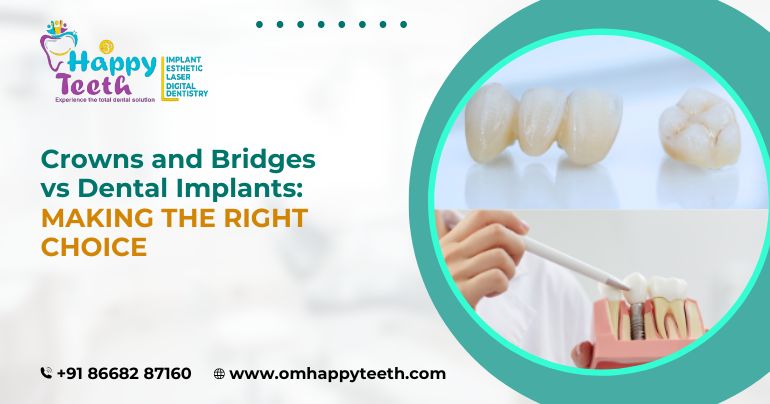
Missing or damaged teeth can affect more than just appearance. They can change the way you chew, speak, and even how confident you feel while smiling. When tooth replacement becomes necessary, patients often find themselves choosing between crowns and bridges or dental implants. Each option has its own benefits, limitations, and ideal use cases.
People exploring crown and bridge dental treatment often want to understand how these options differ and which one suits their situation best. The right choice depends on factors such as oral health, bone condition, budget, and long-term expectations.
At Om Happy Teeth, patients are guided through crown and bridge dental treatment in Pimple Saudagar with clear explanations so they can make decisions that feel comfortable and informed rather than rushed.
Understanding Dental Crowns
A dental crown is a cap placed over a damaged or weakened tooth to restore its strength, shape, and appearance.
Crowns are commonly used when:
- A tooth is cracked or broken
- A tooth has undergone root canal treatment
- Large fillings weaken the tooth
- Teeth are severely worn down
- Cosmetic improvement is needed
Crowns protect the remaining natural tooth while allowing it to function normally.
What Are Dental Bridges?
A dental bridge is used to replace one or more missing teeth by anchoring an artificial tooth between two crowns.
Bridges are suitable when:
- One or more teeth are missing
- Adjacent teeth are healthy enough for support
- The gap needs a fixed solution
- Bone support is limited
- Immediate tooth replacement is preferred
This approach relies on nearby teeth for stability.
Overview Of Dental Implants
Dental implants replace missing teeth by placing a titanium post into the jawbone, which acts as an artificial tooth root.
Key features of implants include:
- Independent tooth replacement
- Strong bone integration
- Natural look and feel
- No support needed from nearby teeth
- Long-term durability
Implants aim to mimic the structure of a natural tooth more closely than other options.
Key Differences Between Crowns, Bridges, and Implants
Understanding the main differences helps patients choose wisely
Comparison points include:
- Crowns and bridges rely on existing teeth
- Implants are supported by the jawbone
- Bridges require trimming adjacent teeth
- Implants preserve the surrounding tooth structure
- Implants generally last longer
People considering crown and bridge dental treatment often compare these factors carefully before deciding.
Procedure And Treatment Time
Treatment duration varies significantly between the two options.
Crowns and bridges usually involve:
- Tooth preparation
- Impression taking
- Temporary restoration
- Final placement within weeks
Dental implants usually involve:
- Surgical placement of an implant
- Healing period for bone integration
- Placement of the crown after healing
- Longer overall treatment time
Patients who want quicker results may lean toward bridges, while those planning for long-term stability may prefer implants.
Comfort And Healing Experience
Comfort is a major concern for many patients.
Crowns and bridges typically involve:
- Minimal surgical discomfort
- Faster recovery
- Mild sensitivity initially
Dental implants may involve:
- Mild post-surgical soreness
- Healing over several weeks
- Gradual comfort improvement
Both options are generally well tolerated when planned properly.
Impact On Jawbone Health
Jawbone preservation is an important factor often overlooked.
Crowns and bridges:
- Do not stimulate the jawbone
- May allow gradual bone loss under a missing tooth
Dental implants:
- Stimulate bone through chewing forces
- Help maintain jawbone density
- Prevent sunken facial appearance
This makes implants a preferred option for long-term oral health.
Maintenance And Oral Care
Daily care plays a role in the success of both treatments.
Care for crowns and bridges includes:
- Careful brushing around margins
- Special flossing techniques
- Regular dental checkups
Care for implants includes:
- Consistent oral hygiene
- Gum health monitoring
- Routine professional cleanings
Good habits extend the life of any dental restoration.
Cost Considerations
Cost is often a deciding factor.
Factors influencing cost include:
- Number of teeth replaced
- Materials used
- Complexity of procedure
- Long-term maintenance needs
While bridges may seem more affordable initially, implants often offer better long-term value due to durability.
Patients seeking crown and bridge dental treatment in Pimple Saudagar are encouraged to consider both immediate and future costs.
Who Is A Good Candidate For Crowns And Bridges?
Crowns and bridges may be ideal if you:
- Have healthy adjacent teeth
- Want a quicker solution
- Prefer non-surgical treatment
- Have limited bone support
- Need cost-effective care
They remain a reliable option for many patients.
Who Is A Good Candidate For Dental Implants?
Dental implants may be ideal if you:
- Have good overall oral health
- Want a long-lasting solution
- Have an adequate jawbone
- Prefer preserving nearby teeth
- Are you willing to invest in long-term care
A detailed evaluation determines suitability.
Role Of Professional Guidance
Choosing between these treatments should never be rushed.
At Om Happy Teeth, treatment planning involves:
- Detailed oral examination
- Imaging and bite analysis
- Discussion of lifestyle needs
- Honest explanation of pros and cons
This approach helps patients feel confident about their choice.
Frequently Asked Questions
- Are crowns and bridges permanent solutions
Crowns and bridges are long-lasting restorations, but they are not considered permanent for life. With proper care and regular dental visits, they can last many years before needing repair or replacement. - Do dental implants cause pain during or after treatment?
Dental implant procedures are performed under anesthesia, so discomfort during treatment is minimal. Some mild soreness after the procedure is normal and usually settles within a few days with proper care. - Which option looks more natural: crowns, bridges, or implants
All three options can look very natural when designed correctly. Dental implants often feel closest to natural teeth because they are supported by the jawbone and function independently. - Can bridges affect nearby healthy teeth?
Yes, bridges require shaping the adjacent teeth to support the artificial tooth. While this is safe when done properly, it does place additional responsibility on maintaining those supporting teeth. - How long do dental implants usually last
Dental implants are designed to be a long-term solution and can last for decades with good oral hygiene. Regular checkups and healthy gums play a major role in their longevity.
Choosing The Best Tooth Replacement Option
Crowns, bridges, and dental implants each serve a valuable purpose in restoring smiles. The best choice depends on your dental condition, comfort level, time frame, and long-term goals. Understanding these differences makes decision-making easier and more confident.
For those considering crown and bridge dental treatment in Pimple Saudagar, expert guidance at Om Happy Teeth ensures that every option is explained clearly and chosen with care. The right solution restores not just teeth, but comfort, function, and confidence for years to come.